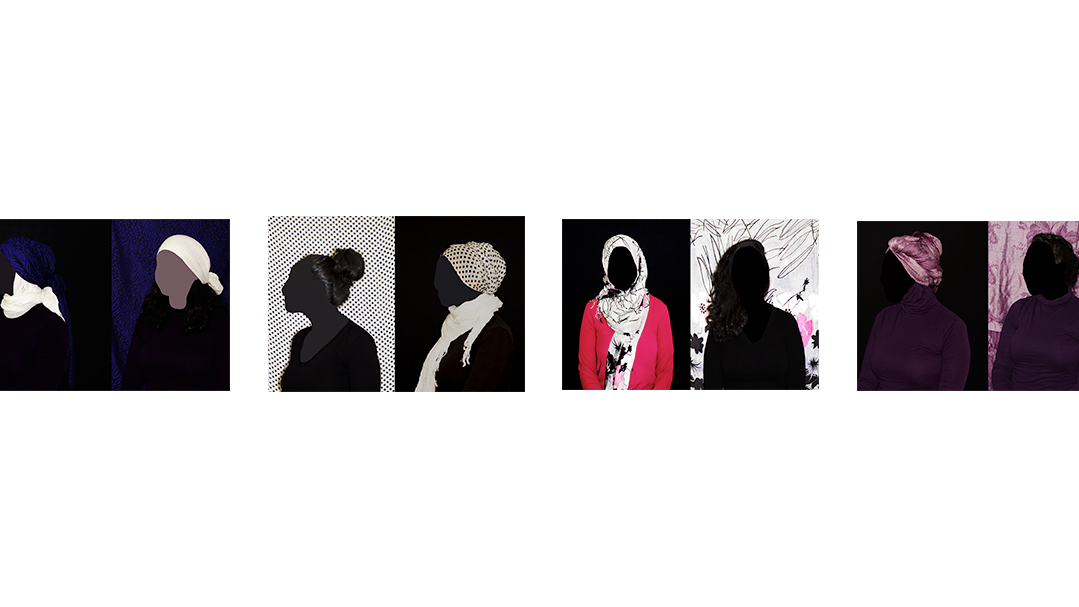
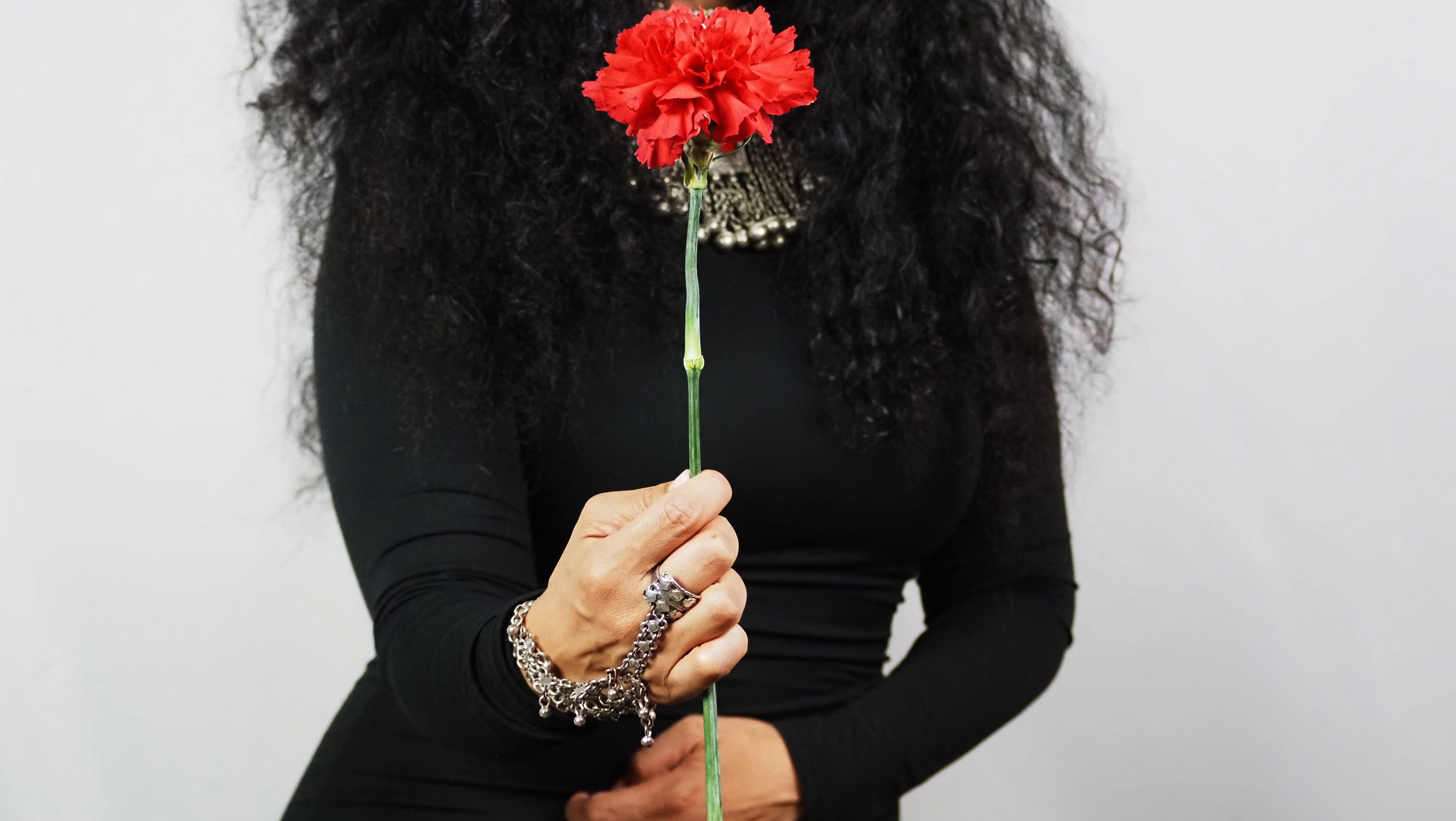
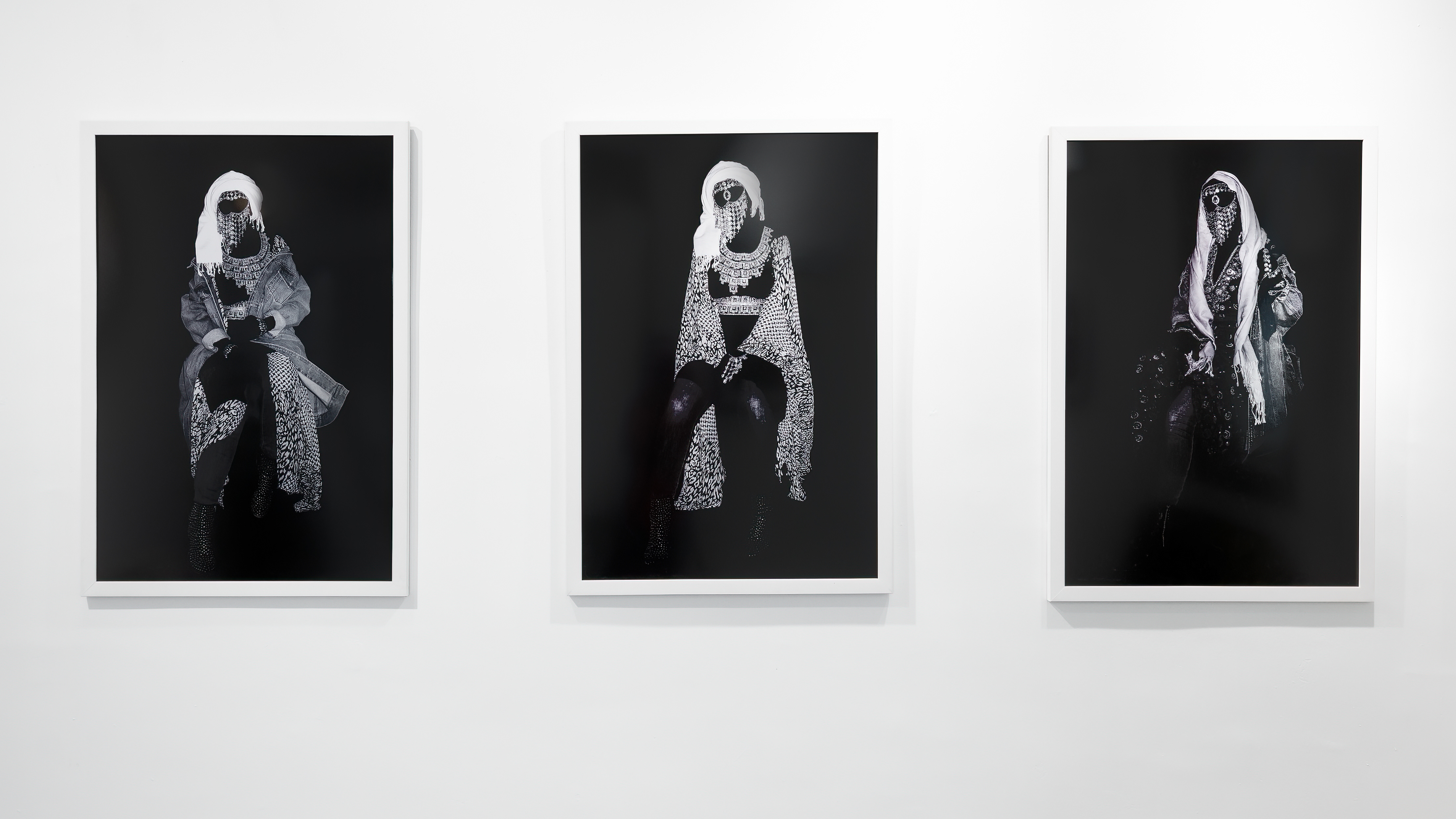
In this body of work, I explore themes of loneliness, estrangement, and longing through self-portraiture, using my own image as a stand-in for family members I deeply miss. By presenting multiple versions of myself within a photograph, I create a visual narrative drawn from memories of past Ramadan evenings, when family ties once felt closer. While I act as a stand-in for several family members, I work with what is available to me, so the recurrence of clothing across these images reflects both the practical limits I face and the subtle ways I see myself mirrored in the women I miss. Each figure represents a different family member revealed by the titles, despite their visual similarities.
These images are not simply portraits of absence, but of longing and the desire for reconnection, where the body becomes a vessel through which familial bonds are mourned and reimagined. The separations depicted are shaped by generational cultural tensions experienced by first-generation Yemeni Americans navigating a fractured sense of identity, as well as by Yemen’s ongoing proxy war, which continues to divide families through violence and prolonged humanitarian crisis. The work explores the emotional spaces that exist between family members, revealing how love can persist despite physical and emotional distance.
Through this deeply personal project, I invite viewers to engage with the tight compositions—fragments of memory—and reflect on the complexities of familial relationships, the pain of distance, and the yearning for loved ones.
Me and Mama
In this photograph, titled Me and Mama, I began to record the words that carried me back to a time before estrangement, when our similarities went unnoticed rather than lost. As the years pass, I see my mother in the way I move, speak, and cook. She is all around me—no matter the physical distance between us or the differences that shape our relationship.
The image captures me as her youngest daughter, smiling, happy to sit beside her, ready to listen to her stories and jokes. I could not separate the recitation of the poem from the photograph. They exist together as one, offering the viewer a way in—to connect more deeply with the complicated, enduring relationship between me and Mama.
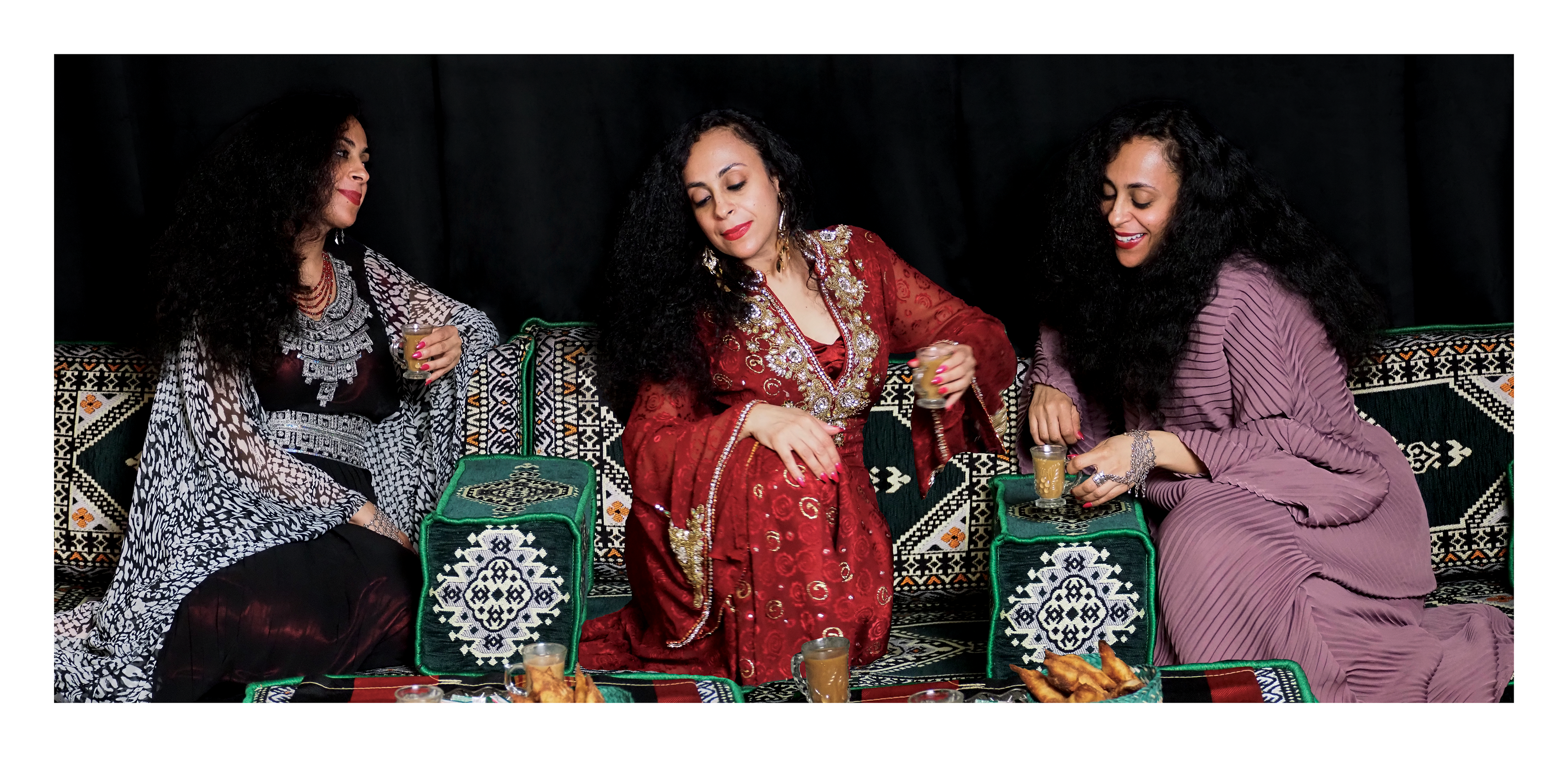
The Three Daughters of a Sheikh | بنات الشيخ الثلاث
Three Daughters of a Sheikh is drawn from a memory of my sisters and me finally being in the same house during Ramadan in the early 2000s, when my aunts would proudly say, “Look at the three daughters of a sheikh, finally together.” Ramadan is a time centered on family, and for Yemenis living in the diaspora, it is rare for aunts, uncles, and even siblings to gather in one place. Families are often separated by Yemen’s ongoing proxy war. In this photograph, I can hear my aunts’ voices in the background and feel their loving gaze. At the time, I did not know it would be the last Ramadan we were all in the same home together.
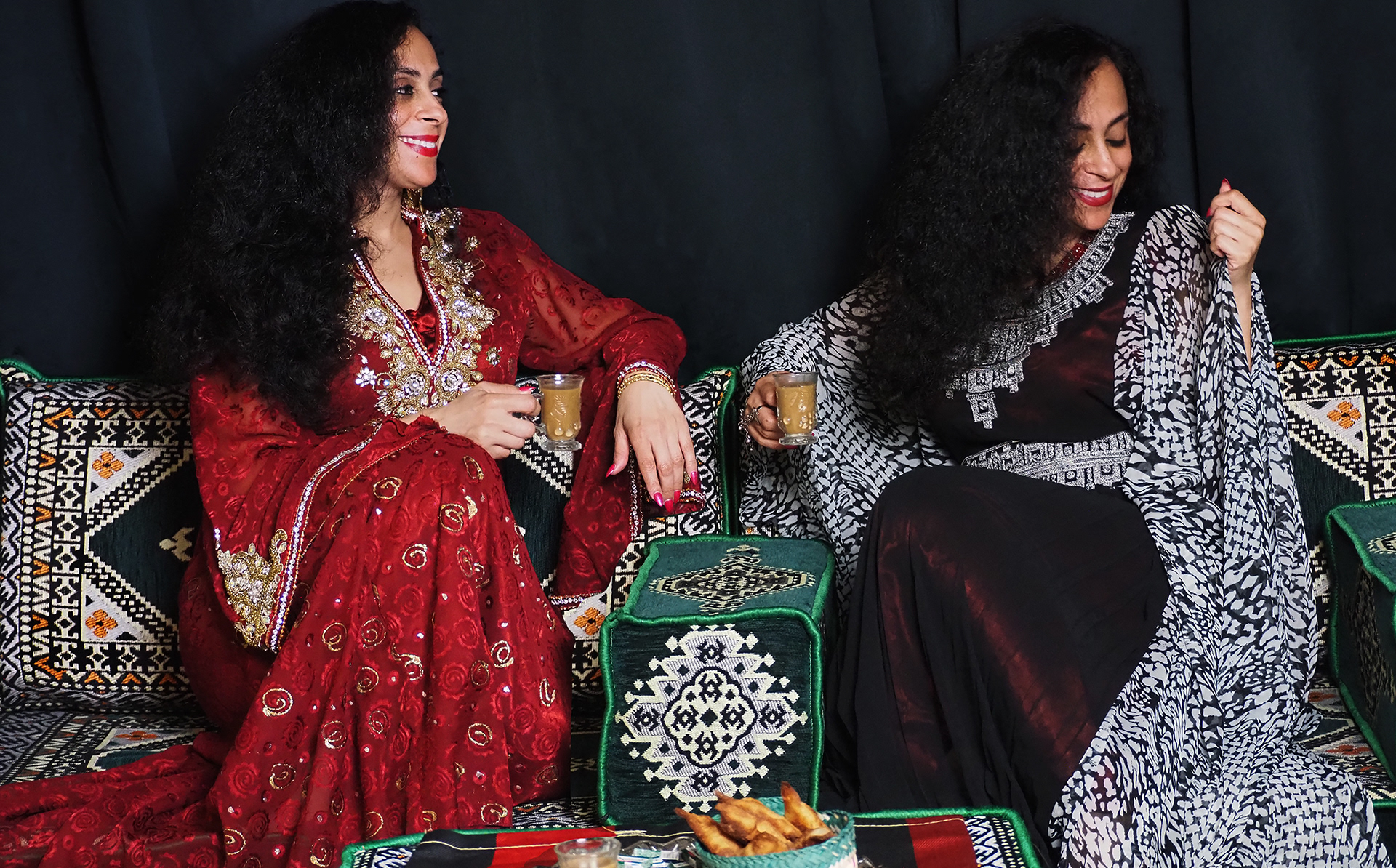
The First Nieces | بنات الأخت الأولى
(Ya Sabah Al Afrah | A Morning of Happiness)
My oldest nieces carry the meanings of their names—morning and happiness. In this photograph, I return to memories of how they move through space together: one in motion, the other quietly grounded, especially during Ramadan. They are filled with light, innocence, and love. Their energy turning our home into a place filled with warmth and gentle debate between the two.
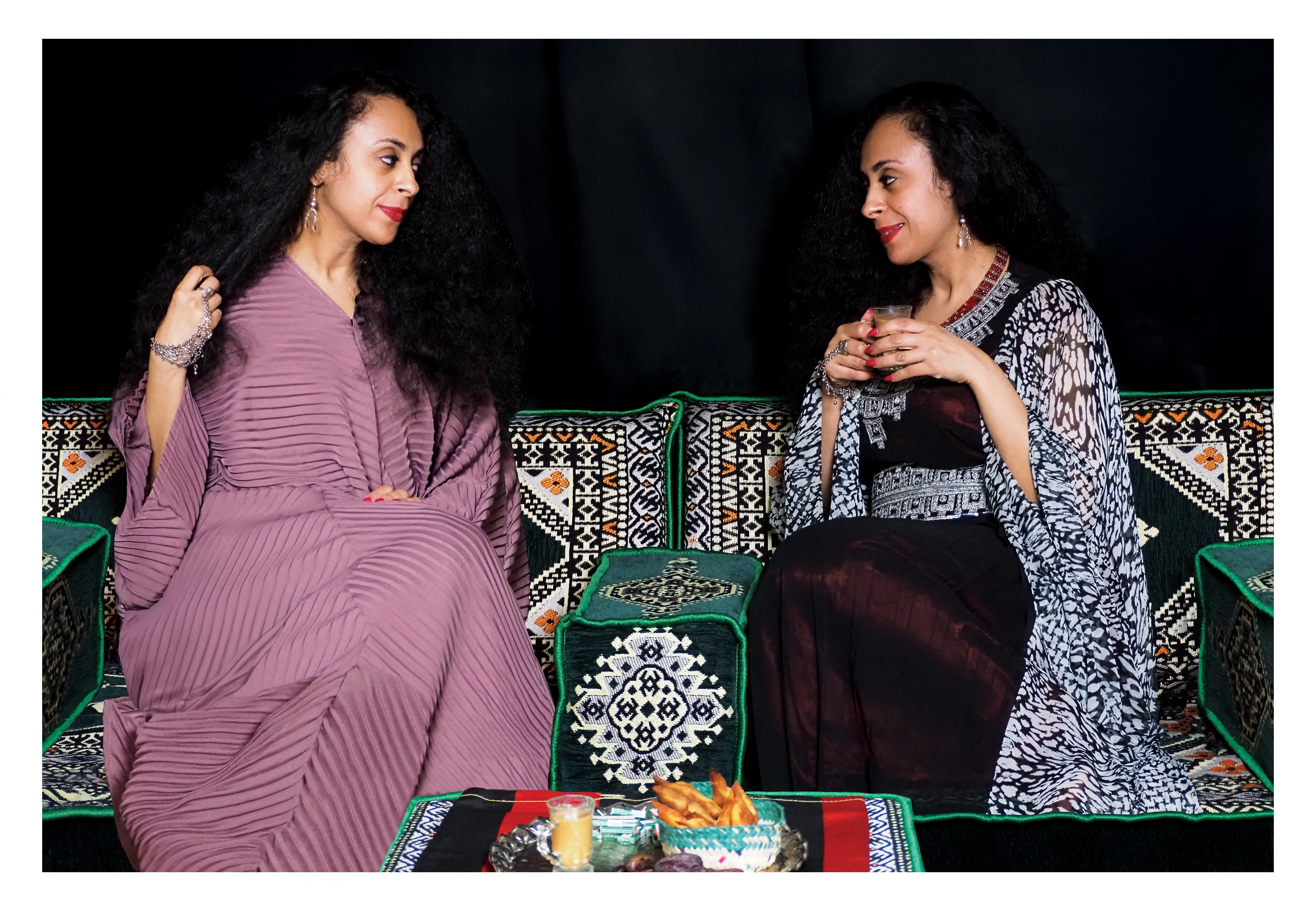
Mama's Faves | بنات ماما المفضلات
In this photograph, I draw from memory to reflect on conversations with my sister about how similar our mannerisms are, despite not being raised in the same home—the way we smile, sit, hold a glass, and use our eyes to communicate unspoken secrets. This image is shaped by nostalgia and melancholy, as we no longer have access to one another due to cultural tensions that separate us. We often joked that we were our mother’s favorite daughters.
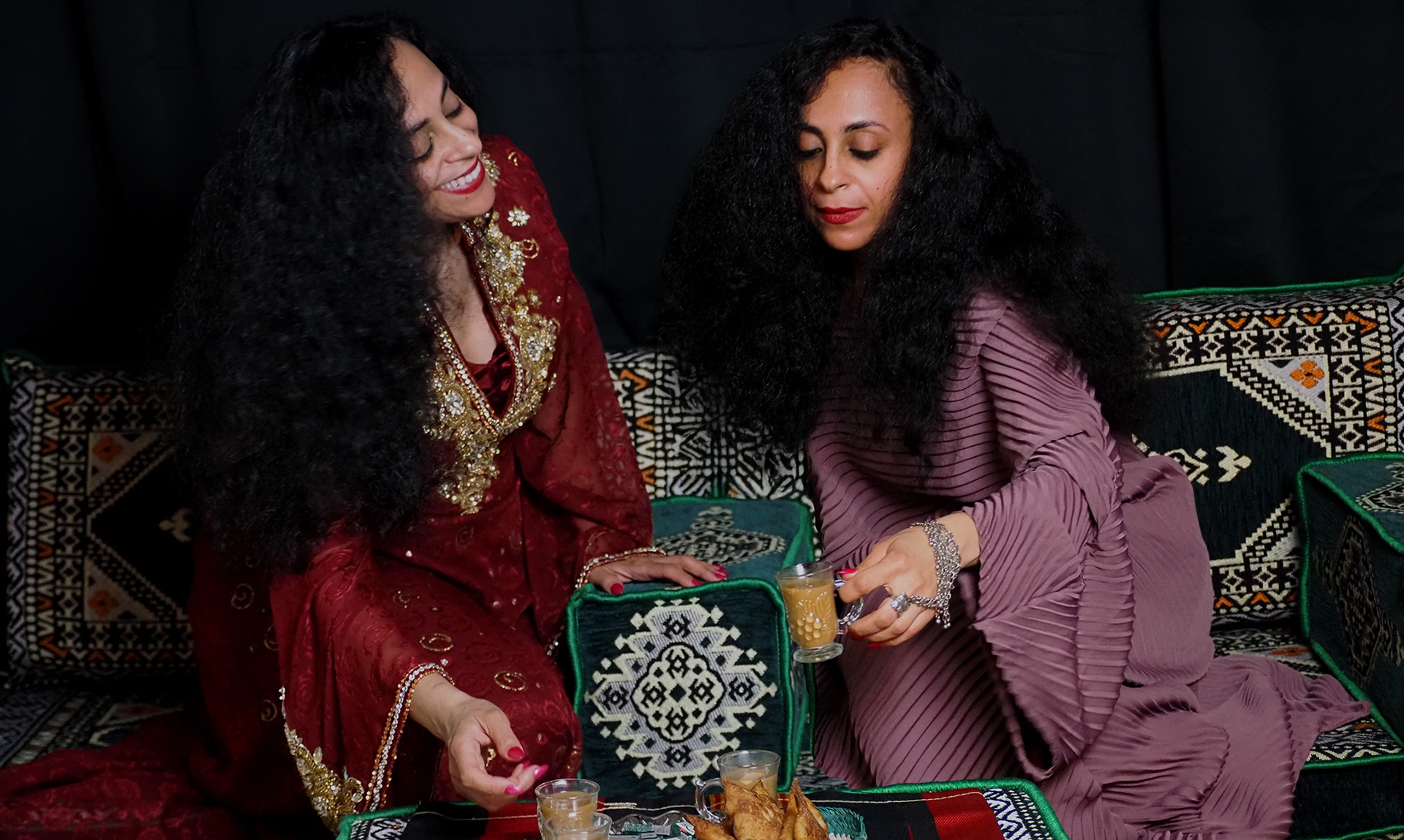
The Big Sisters | الأخوات الكبيرات
To Bushra and Andera—my big sisters: one who grew up carrying the weight of being the eldest, and the other who is, in truth, the eldest. Andera is firm and unwavering, and Bushra is warm, with a constant smile. I carry pieces of both of them within me.
We are often mistaken for prissy or snobby, but in reality, we are simply Arab girls raised to honor ourselves and to place family above all else. No matter our differences, our sisterhood is unbreakable. Estrangement does not define the love in our hearts for one another. It only pushes our support into the background, where it quietly lingers beneath the cultural tensions that older siblings often have with their younger siblings.
In this photograph, I see Bushra smiling from ear to ear, while Andera—who rarely smiled—listens intently to one of Bushra’s lighthearted stories. Both are sipping the milk tea I made for them. In that moment, I see not distance, but love.
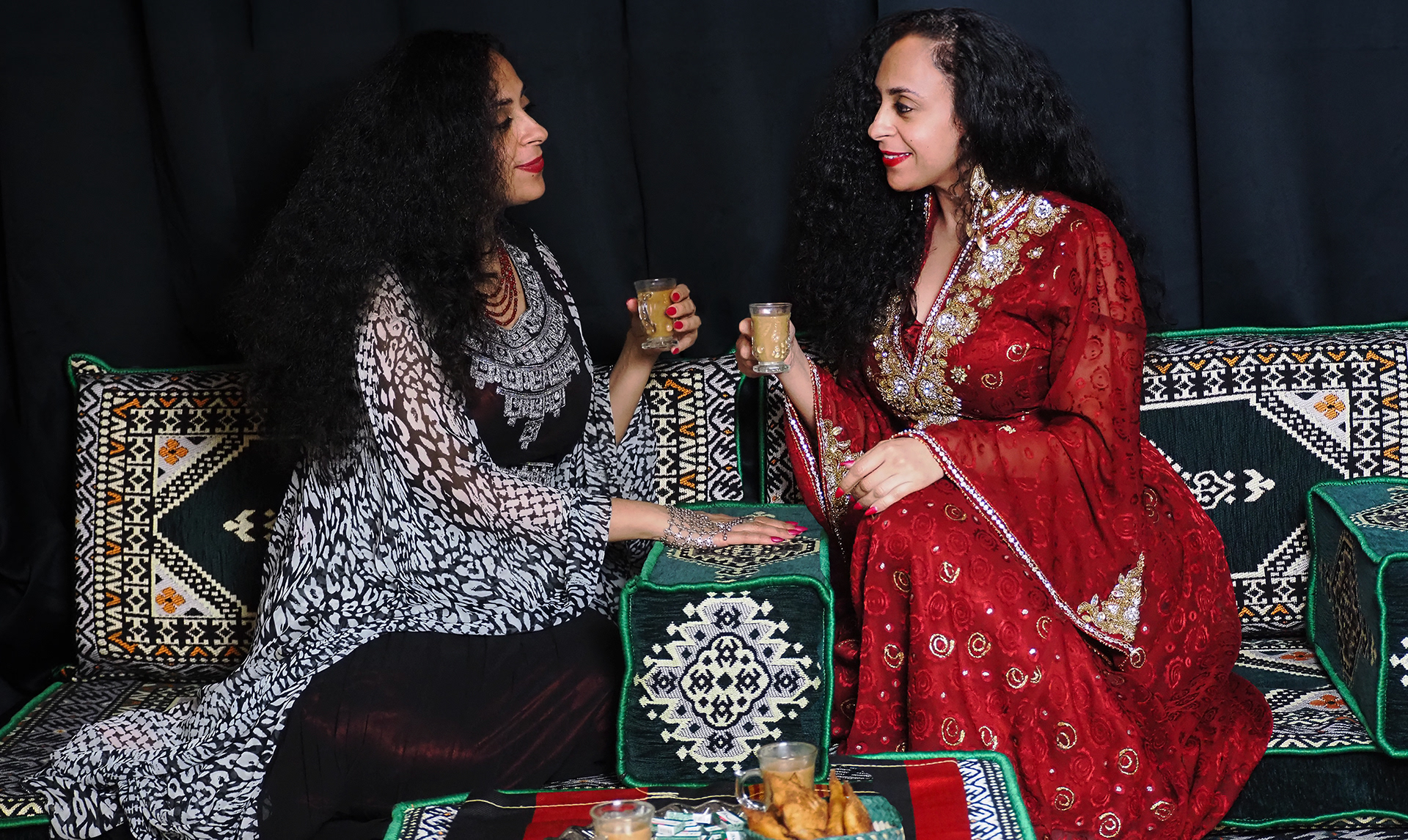
The Eldest and the Youngest of the Daughters | البنات الأكبر سنا والأصغر سنا
She and I look down and smile the same way. We giggle and grow shy in the same moments, even though we were raised apart. She taught me some of her secret recipes, and I taught her how to move from a figure eight into a shimmy when belly dancing. When I was sixteen, she came to live with us for a while, and during that time our bond deepened. She is my eldest sister, and I have always looked at her the way a student studies her teacher—learning what it means to become a woman.
In this photograph, I am listening closely to the advice my eldest sister is sharing with me. She always had stories wrapped in lessons about how cruel the world can be, especially within families. Her wisdom, her pain, and her never-ending smile taught me to trust in what is destined, even when the path is difficult.
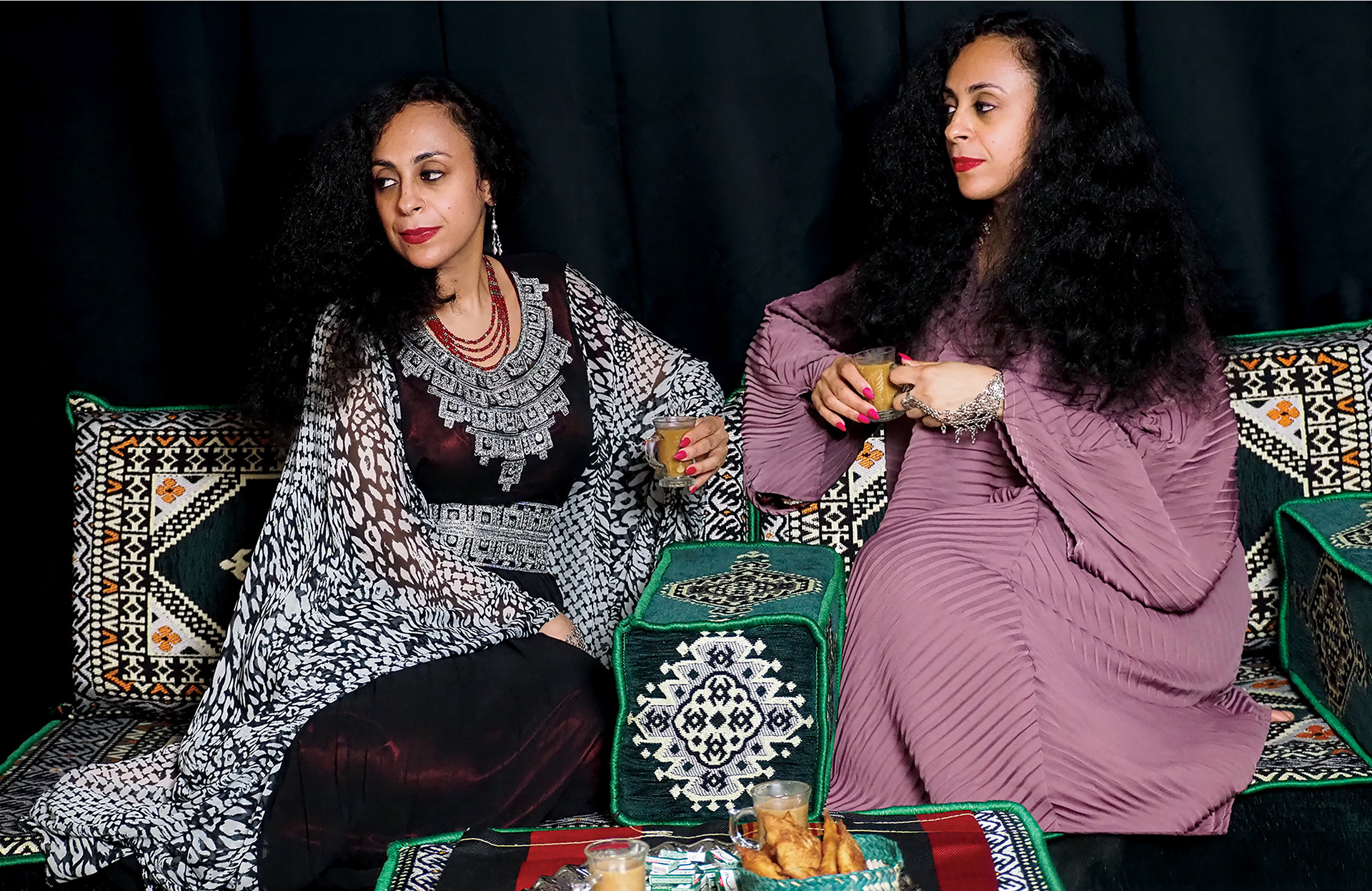
Paternal Aunts | عمات
My paternal aunts sit gazing sharply at my sisters and me after we break our fast during Ramadan in the early 2000s, silently quieting us as the yearly Ramadan soap opera is about to begin. Their gaze is sharp and loud without a single word spoken. My aunts mastered this way of communicating and were never misunderstood.